| News |
January 14, 2007: Updated PyMOL 0.99rev8 Executable Builds have been posted for download by current PyMOL Subscribers.
The open-source code for 0.99rev8 is revision 2805 of branch "b099" in the SVN repository.
svn export -r 2805 https://pymol.svn.sourceforge.net/svnroot/pymol/branches/b099/pymol pymol-0.99rev8
Updated Educational-use-only PyMOL Builds are also now available upon approval at no cost to teachers and full-time students.
If you need updated download credentials, please contact sales@delsci.com with your invoice number, a subscription quote request, or an educational use declaration.
November 1st, 2006: DeLano Scientific LLC is moving! The new office address is:
DeLano Scientific LLC
Suite 541-F Cowper St.
Palo Alto, CA 94301-1803, USA
Please use the above address for Fedex, DHL, and other private courier services.
For U.S. Mail and international postal services, please use:
DeLano Scientific LLC
P.O. Box 1118
Palo Alto, CA 94302-1118, USA
Updated contact numbers:
Business: +1-650-283-6945September 1st, 2006: Learn more PyMOL at the American Chemical Society Meeting! Lead PyMOL Developer Warren L. DeLano will be holding an informal PyMOL demonstration, training session, and users group meeting in Booth #327 of the ACS National Exposition in San Francisco, September 11th-13th. Please stop by at your convenience!
August 1st, 2006: DeLano Scientific has adopted a controlled-access download system for our most current precompiled PyMOL builds (including betas). Going forward, access to these convenient and ready-to-run executables will be limited to project sponsors only. Non-sponsors can of course continue to compile the updated Open-Source code at no cost (other that time and effort) or use our older precompiled builds.
If you are a current PyMOL Subscriber and have not yet received your new download credentials, please email sales@delsci.com with your most recent invoice number and subscription expiration date. We will then send you your updated download credentials as soon as possible!
July 1st, 2006: Operations Manager Jon iLam has completed her time with the company and is taking the next step in her career. DeLano Scientific thanks her for her contribution to the PyMOL project and wishes her luck in future endeavors!
February 6th, 2006: PyMOL v0.99 release candidates are out! Download a precompiled executable for Windows, Mac, Linux, IRIX, or Solaris, or compile the open-source code.
February 5th, 2006: DeLano Scientific announces immediate availability of the MacPyMOL Universal Binary for Intel/PPC Macs, and posts various benchmarks showing that PyMOL runs almost as fast on an entry-level iMac Core Duo as on a much more expensive dual-processor Opteron Linux workstation.
January 9th, 2006: PyMOL 0.99 is Coming Soon! Please test the latest 0.99 beta build and provide immediate feedback on any serious problems you encounter so that they can be corrected prior to the official release.
October 21st, 2005: Updated information on purchasing stereo 3D hardware & displays can be found here.
October 19th, 2005: Apple releases the first PowerMacs that support for Stereo 3D "in a window". MacPyMOL builds that fully exploit this capability are now available.
July 18th, 2005: Sequence to Structure (S2S): display, manipulate, and interconnect RNA data from the sequence to the structure (Fabrice Jossinet) -- A new Java tool that uses PyMOL for molecular visualization.
May 2nd, 2005: PyMOL v0.98 has been released. Click here to download a precompiled PyMOL Executable Build (Windows, Mac OS X, Linux, IRIX, or Solaris) from DeLano Scientific LLC .
March 28th, 2005: PyMOL S.F. Bay Mailing List: Are you local to the San Francisco Bay Area? If so, then please subscribe to the Yahoo pymol-sfbay mailing list in order to be notified of local PyMOL events.
February 16, 2005: The PyMOL Wiki Goes Live! Much thanks to Jason Vertrees for creating this important community resource for PyMOL users.
February 10, 2005: Review: DeLano W.L. The Case for Open-Source Software in Drug Discovery. Drug Discovery Today, 10, 213-217 (2005) is now available online via ScienceDirect. No subscription? Request a reprint from the author.
January 14, 2005: PyMOL version 0.98 is nearing completion! If you haven't yet tried one of the latest 0.98 beta versions yet, then please do so soon and provide feedback. Builds are available for Windows, Linux, and IRIX as well as for Mac OS X. Or you can simply pull the current source from CVS.
January 13, 2005: Does Stereo 3D Matter to You? DeLano Scientific LLC is collecting virtual "signatures" by email from those who rely upon OpenGL Stereo 3D visualization. Why? Because Apple hasn't implemented industry-standard stereo 3D (in a window) into Tiger, their new MacOS X release 10.4, even though every other major platform already supports this capability. We will hand-deliver a hardcopy to Apple management of every email we receive on this issue before February 1st in order to emphasize how much this feature matters to scientists and engineers today. Click here to read and respond to the full petition. Thanks!
January 12, 2005: DeLano Scientific LLC officially announces the opening of its South San Francisco office!
   DeLano Scientific LLC
   400 Oyster Point Blvd., Suite 213
   South San Francisco, CA 94080-1918, USA
   V: 650-872-0942
   F: 650-872-0273
Please make an appointment to stop by for lunch if you're in town! We'll soon be holding regular users meetings and training sessions for local PyMOL users and out-of-town guests.
July 15, 2004: Open-Source PyMOL 0.97 has been released for all platforms. This version addresses a serious bug in the version 0.96 sequence viewer and includes two useful new plugins, for APBS electrostatics calculations and direct PDB downloading.
   - Sequence viewer for sequence-based manipulation of 3D molecules.
   - Experimental vacuum electrostatic potential calculations for proteins (only).
   - Get view button now copies matrix to clipboard automatically.
   - MOL2 and multi-MOL2 file input.
   - Display of aromatic bonds from SDF, MOL, and MOL2 files.
   - New selection keywords: polymer, solvent, organic, inorganic.
   - APBS interoperativity: PQR file input and output, DX file reading.
   - Plugin Menu for end-user add-ons.
   - Molecular picking and editing is now more general.
   - Improved surface_quality=2.
   - New "surface_solvent" setting allows display of solvent accessible surfaces.
   - Improved color rainbow.
   - Various other minor features have been added
   - Various major and minor bugs have been fixed.
   - Presets (in the Action menu) provide common views very quickly.
   - Context-specific pop-up menus now direct actions to where you point.
   - Mouse wheel can now control clipping slab width and position.
   - Improved look-and-feel, including bigger controls and longer names.
   - Appearance wizard facilitates color and representation control.
   - Labels can now be ray traced, with a few new fonts (label_font_id=0,1,2,3,4).
   - Two new surface types: dots (surface_type=1) & tri-mesh (surface_type=2) added.
   - Better handling of alpha-channel for semi-transparent figures.
   - Cartoons and spheres can now be "picked" using the mouse.
   - Roving origin behavior has been improved.
   - New cross-platform build for OS-X uses Tcl/Tk under X11 without Fink.
   - Molecular picking and editing is now more general.
   - Numerous features and tweaks have been added.
   - Various major and minor bugs have been fixed.
 ). Synchonized beta builds of the Open-Source equivalent for Windows and Linux are available too (standalone builds only). As always, please exercise caution with test versions.
- Fixed blunder with O/BRIX map reading code. - Fixed 0.86 session reading. - Adjusted Z-axis tracking of the roving origin to clipping planes movement. - Changed default save location for PNG files under OS X (avoids confusion).
This is mostly an "under the hood" improvements release, but there are some developments worth noting:

  Significant changes

   - New "dss" command assigns secondary structure quickly.
   - PyMOL can now read O maps (BRIX but not DSN6) and some Biosym GRiDs maps.
   - Improved ray tracing quality and speed.
   - Long lists of residues in selections are now allowed.

  Other changes

   - New "import pymol" support for RPM & Win32 builds that use system Python.
       [Don't forget to call pymol.finish_launching() afterwards though!]
   - Improved alpha-channel support for transparent surfaces and backgrounds.
   - API's "cmd.do" can now take multi-line strings and lists.
   - New "split_states" command for separating NMR ensembles.
   - New "cartoon_transparency" setting.
   - Can display bond valences while in stick mode.
   - New "stick_ball", "stick_ball_ratio" settings for ball & stick models.
   - Gaussian map generation from model coordinates.
   - Can preserve original PDB atom IDs (pdb_retain_ids) & order (retain_order).
   - Much much faster loading of multi-model PDB files and trajectories.
   - Deuterium and Calcium handling improved.
   - New "set_symmetry" & "get_symmetry" commands.
   - Mutagenesis wizard preserves cartoons.
   - New "get_pdbstr" API function.
   - New "movie_loop" setting can disable looping.
   - Sculpting engine now aware of simple sp3-sp3 torsions.
   - Finer Z-scaling/movement control.
   - Upgrade facility for secure enterprises running Windows.
Some of the new features include:

   - Standalone installer for Windows (no external Python required)
       ***heavily requested by corporate IT groups***
   - CMYK color support ("space cmyk" much better for publications)
   - Roving detail/density modes (hard to explain -- best seen)
   - Improved transparency for surfaces
   - Cartoon highlight color (ala Molscript)
   - Opaque/solid objects in ray_tracer
   - Spectrum command for fast color ramps
   - Electrostatic map reading (.phi format) and graphic color ramp gadget
   - Wizards now saved in session file
   - Wizards now stack
   - Scenes (more powerful than views; more convenient than sessions)
   - Updated demonstrations
   - Single click-and-drag rotation of bonds in editing mode
   - Tear off menus
   - Stereo support on Mac (native version only)
   - Improved performance on certain tasks (rainbow, color by chains,color by b-factor)
   - Better support for stereo figure generation with "ray angle=-3",
        "ray angle=3" etc
These are the graphics configurations which we are likely to be using for PyMOL development over the next year or two, so you may want to consider purchasing the same (or very similar) hardware in order to be certain that PyMOL will run optimally on your system. When in doubt, choose ATI over nVidia. ATI is currently more Linux-friendly and supports hardware antialiased lines on most of their cards (desirable for working with electron density!).
If you must use nVidia cards with Linux, I suggest trying RedHat 7.3 -- there are some serious problem with nVidia's latest driver (1.0.4349) on RedHat 9.0 (which shipped with broken C libraries). Also try to avoid nVidia's nForce chipsets -- thanks to their propriety architecture, you can't use non-Vidia AGP graphics cards with them under Linux!
Meanwhile, the
"pymol-users" mailing list [PyMOL]
will continue as a highly focused forum for sharing tips on how
to use PyMOL more effectively.
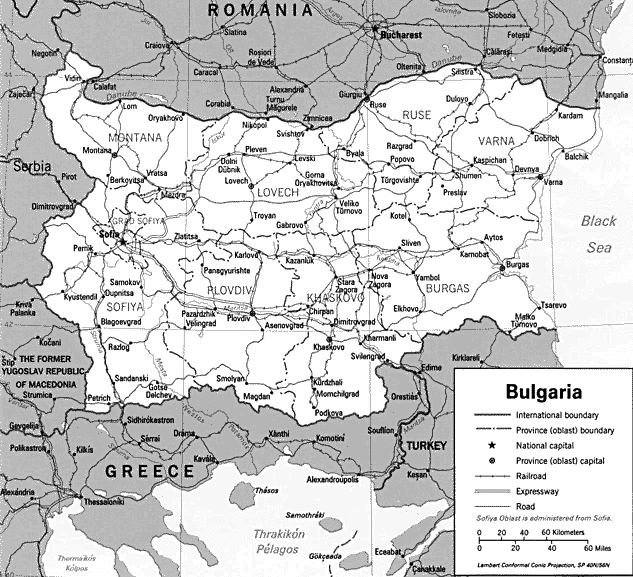
viewport 650,650
load_png bulgaria.png
Molecular sculpting permits coarse molecular modeling instantly on any kind of structure. It will likely be useful for qualitative projects, such as medicinal chemistry brain-storming within the context of a co-complex structure, and for setting up molecular geometries for subsequent calculations using rigorous external tools (such as GAMESS, MacroModel, MOE, ICM, CCP4, X-PLOR, CNS, etc.).
To do molecular sculpting like in the video, paste the following commands into a ".pml" script:
set sphere_transparency,0.60
set sphere_color,white
set auto_sculpt,1
mouse three_button_editing
fragment benzene
show sticks
show spheres
zoom all,4
Launch PyMOL, run the script from the File menu, then CTRL-left-click to drag atoms, or CTRL-middle-click to start building off of hydrogens...
Copyright © 2002 DeLano Scientific. All rights reserved. |
Hosted at:
|